
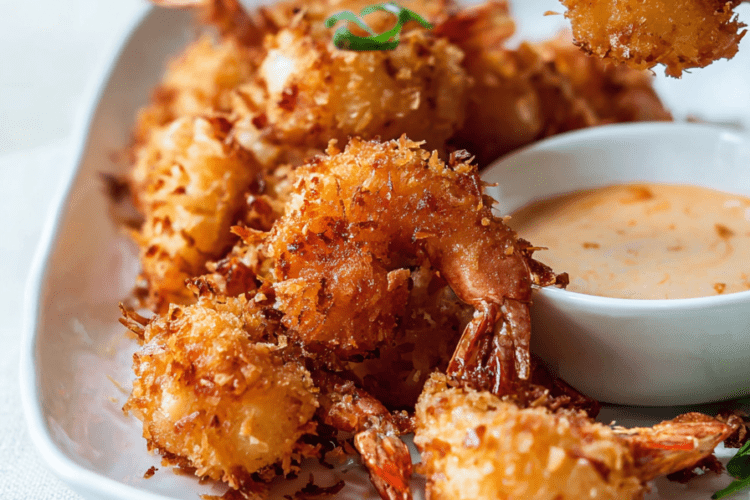
I still remember the first time I had coconut shrimp at a little beachside spot years ago. One bite and I was hooked. The crunch. The sweetness. The way the coating just shattered. I kept going back to restaurants just to order it.
Then one day I thought — why am I paying restaurant prices for something I can make at home?
So I started testing. And after a few batches, I landed on a version that honestly blows most restaurant versions out of the water.
The secret? It’s all in the layering. A light flour coat, then egg, then a generous press into sweetened coconut and Panko. That three-step process creates a crust that actually stays on and crisps up beautifully in hot oil.
But the real star of this recipe is the dipping sauce. Instead of just bottled sweet chili sauce, I make a quick three-ingredient blend with creamy mayo, fiery Sriracha, and Thai sweet chili. It’s bold, a little spicy, and completely addictive.
Whether you’re feeding a crowd for game day or just want something special on a Tuesday night, this recipe delivers every time. Let me show you exactly how to make it.
Prep Time: 10 minutes | Cook Time: 15 minutes | Total Time: 25 minutes | Servings: 4 | Difficulty: Easy
Ingredients at a Glance
Here’s everything you need. Scroll down to the full table for exact quantities and quick tips on each ingredient.
| Ingredient | Quantity | Notes |
|---|---|---|
| Mayonnaise | 1/2 cup | Full-fat works best; avoid Miracle Whip |
| Sriracha | 1 tablespoon | Adjust up or down to taste |
| Thai sweet chili sauce | 1 tablespoon | Found near Asian condiments |
| All-purpose flour | 1/3 cup | Creates the base sticky layer |
| Salt and black pepper | To taste | About 1/2 tsp salt, 1/4 tsp pepper |
| Eggs | 2, beaten | Room temperature preferred |
| Panko breadcrumbs | 3/4 cup | Japanese-style; do not substitute |
| Sweetened shredded coconut | 1 cup | Toast lightly for extra crunch |
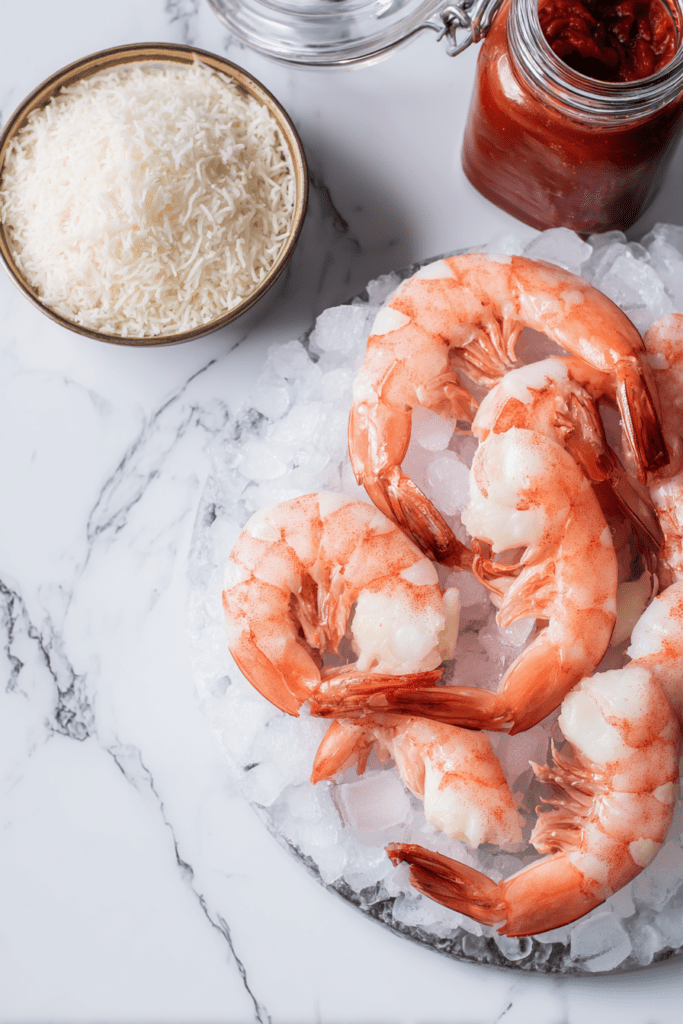
| Jumbo raw shrimp | 1 pound | Thawed, peeled, deveined, tails on |
| Canola oil | 2 cups | Or any neutral high-heat oil |
A Few Notes on the Ingredients
Before you start cooking, let’s talk through the key players. Knowing why each ingredient matters makes the whole recipe click.
Mayonnaise: Any brand you like works here. You just want something neutral that doesn’t overpower the Sriracha and sweet chili. I’d skip Miracle Whip entirely. Its sweetness fights with the other flavors and throws the sauce off balance.
Thai sweet chili sauce: Think of this as a thick, glossy glaze with a gentle kick. It’s more sweet than spicy. You’ll usually find it in the Asian aisle of most grocery stores, right near the Sriracha.
Panko breadcrumbs: Please don’t swap these out for regular breadcrumbs. Panko is coarser and lighter. It absorbs less oil during frying. The result is a crispier, less greasy crust. It’s non-negotiable here.
Sweetened shredded coconut: The sugar in sweetened coconut does something beautiful in hot oil. It caramelizes. You get a golden, slightly candied crust that’s genuinely incredible. You can use unsweetened coconut, but you’ll sacrifice some of that color and crunch.
Jumbo raw shrimp: Always start with raw shrimp. Pre-cooked shrimp gets cooked twice, and the second round makes it rubbery and tough. Jumbo-sized shrimp (about 16 to 20 per pound) are ideal. They hold the coating well and fry evenly.
Step-by-Step Instructions
Step 1: Make the Dipping Sauce First
Start here. Making the sauce first gives it time to chill and lets the flavors come together.
In a small bowl, combine:
- 1/2 cup mayonnaise
- 1 tablespoon Sriracha
- 1 tablespoon Thai sweet chili sauce
Stir until completely smooth. Taste it. Want more heat? Add a little more Sriracha. Prefer it milder? A splash more sweet chili sauce does the trick. Cover the bowl and refrigerate it until you’re ready to serve.
Step 2: Set Up Your Coating Station
Organization is everything here. You’re going to move fast once the frying starts, so get everything in place before you heat a single drop of oil.
Grab three shallow dishes and line them up:
- Dish 1: 1/3 cup all-purpose flour mixed with salt and freshly cracked black pepper
- Dish 2: 2 beaten eggs, whisked until yolks and whites are fully combined
- Dish 3: 3/4 cup Panko breadcrumbs mixed together with 1 cup sweetened shredded coconut
Put a clean plate at the end of the row. That’s where your coated shrimp will wait before hitting the oil.
Step 3: Coat Each Shrimp
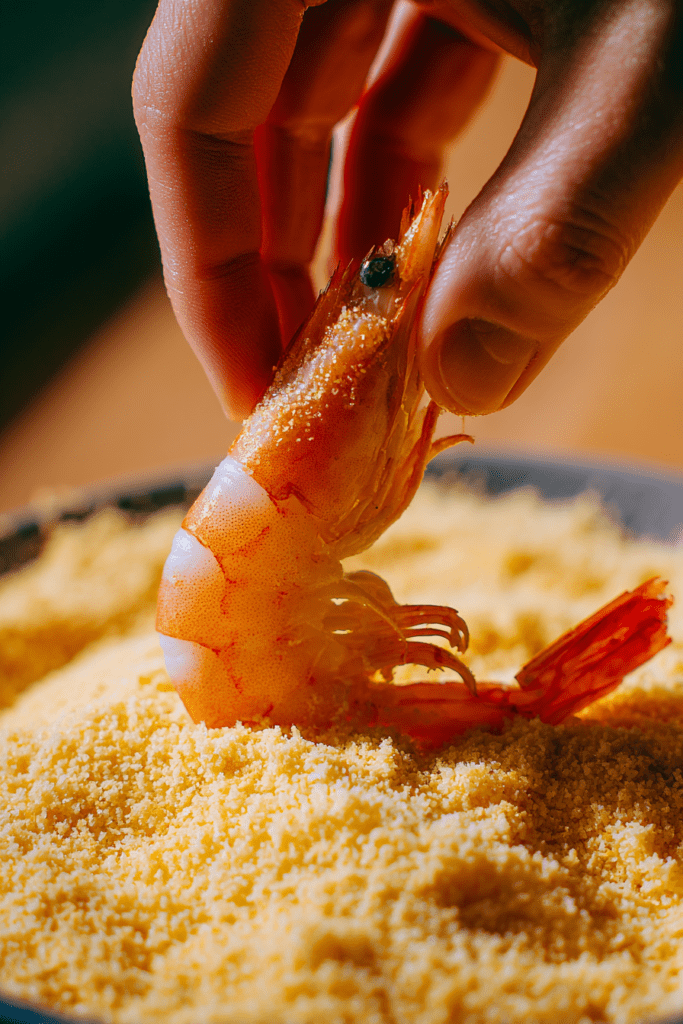
This is the most important part of the whole recipe. The three-step coating process is what creates that signature crunch. Take it one shrimp at a time and hold it by the tail.
- Dredge the shrimp through the seasoned flour. Shake off any excess. You want a light, even coat, not a gummy paste.
- Dip the floured shrimp into the beaten egg. Let the extra egg drip back into the bowl before moving on.
- Press the shrimp into the coconut-Panko mixture. Turn it so every surface gets covered. Use your fingers to gently press the coating onto the shrimp so it actually sticks.
- Transfer the coated shrimp to your clean plate. Repeat with each remaining shrimp.
Pro tip: Once all your shrimp are coated, let them sit for 5 to 10 minutes before frying. This short rest lets the layers bond together. Skip it and you’ll find the coating slides off in the oil. You can also cover and refrigerate them at this stage for up to two hours if you’re prepping ahead.
Step 4: Fry the Shrimp
Pour 2 cups of canola oil into a large, heavy-bottomed saucepan. Heat it over medium-high until the oil starts to shimmer. That shimmer is your cue. It means the oil is around 350 degrees Fahrenheit and ready to go.
Add the shrimp in small batches. Do not crowd the pan.
Crowding is the number one reason coconut shrimp turns out soggy. When you add too many shrimp at once, the oil temperature drops and the shrimp starts to steam instead of fry. Give each piece space to do its thing.
Fry each batch for about 2 to 3 minutes per side. You’re looking for a deep golden-brown color on the coconut coating. The shrimp are fully cooked when they reach an internal temperature of 120 degrees Fahrenheit.
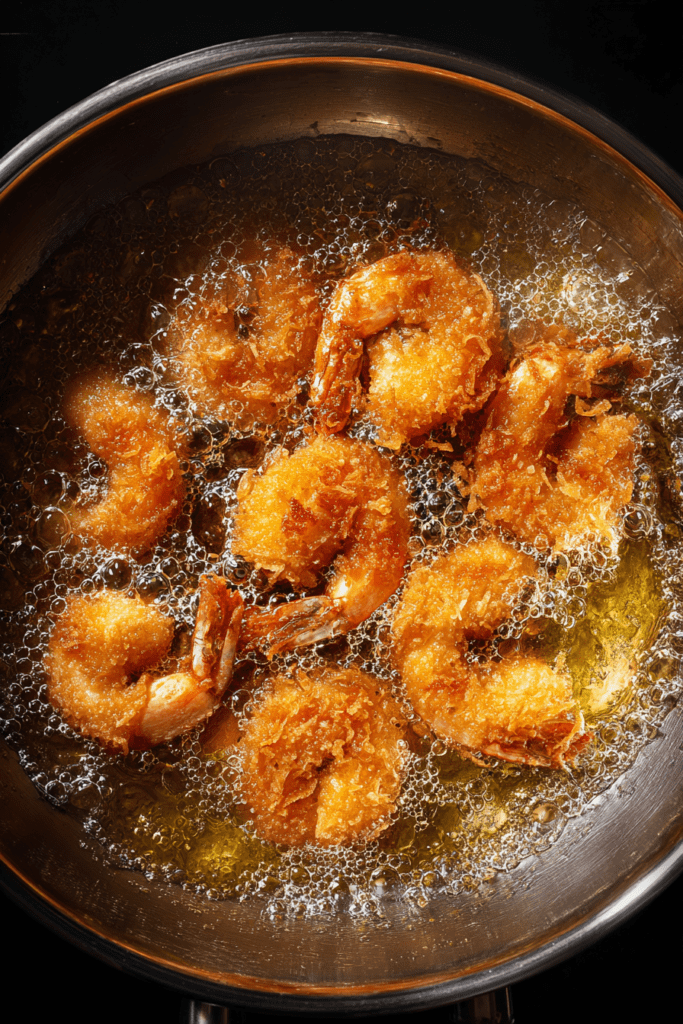
Use tongs to move the cooked shrimp onto a plate lined with paper towels. This drains the excess oil and keeps the crust from going soft. Let the oil come back up to temperature between each batch before adding the next round.
Step 5: Serve and Enjoy
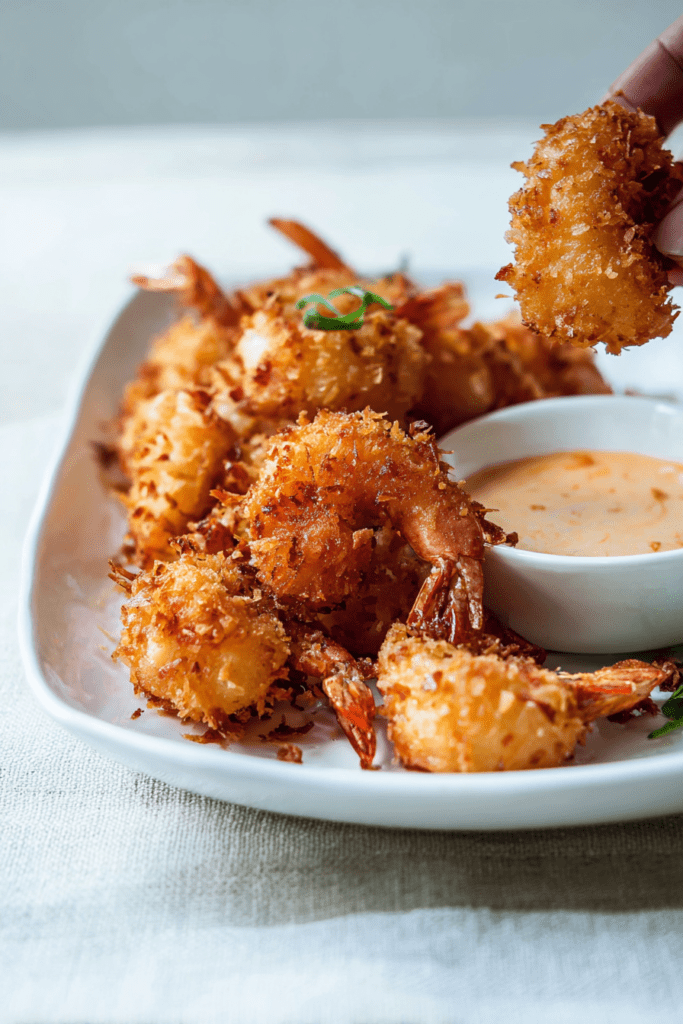
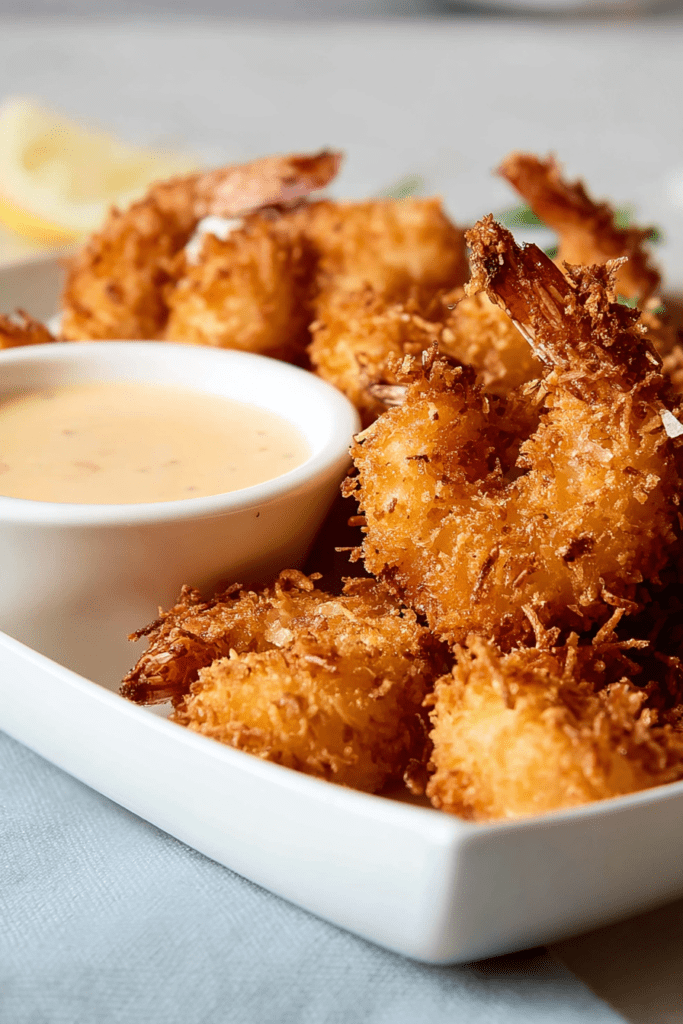
Arrange the shrimp on a serving plate while they’re still hot. Set the chilled dipping sauce alongside.
A few lime wedges on the side are a nice touch. A squeeze of fresh lime over the hot shrimp brightens everything up. It cuts through the richness and makes the coconut flavor pop even more.
These are at their absolute best right out of the pan. The coating is loud when you bite into it. That’s what you’re going for.
Variations and Cooking Methods
Not in the mood to fry? No problem. Here are three alternatives that still get you a great result:
- Air fryer: Arrange coated shrimp in a single layer in the basket. Spray lightly with cooking spray. Cook at 400 degrees for 8 minutes total, flipping halfway through.
- Baked: Spread coated shrimp on a lined baking sheet. Bake at 400 degrees for 20 minutes, turning once at the 10-minute mark. The crust will be a little lighter in color but still satisfying.
- Pan-fried: Heat about a quarter inch of oil in a large skillet to 350 degrees. Fry in a single layer for 4 minutes total, flipping once halfway through.
Storage and Reheating
| Method | Duration | Best Reheating Option |
|---|---|---|
| Refrigerator | Up to 3 days | Oven or air fryer at 350°F |
| Freezer | Up to 2 months | Oven or air fryer at 350°F |
| Microwave | Not recommended | Turns coating soft and chewy |
Serving Ideas
Coconut shrimp is a solid appetizer on its own. But pair it with the right sides and it becomes a full, satisfying meal.
Here’s what works really well alongside it:
- Steamed jasmine rice or coconut milk rice. The mild base balances the richness of the fried shrimp perfectly.
- A crisp green salad with a citrus vinaigrette. The acidity cuts right through the coating.
- Sweet potato fries. Their natural sweetness echoes the coconut crust in a really pleasant way.
- Creamy coleslaw. Cool, tangy, and a great contrast to the warm, crunchy shrimp.
Dipping Sauce Alternatives
The Sriracha mayo blend is my personal favorite. But if you want to offer a few options, here are some other sauces that pair really well:
- Equal parts Thai sweet chili sauce and apricot or orange preserves for a fruity, sweet option
- Honey mustard dressing for something tangy and mild
- Thai peanut sauce for a savory, nutty contrast
- Tartar sauce if you want something cool and creamy
Expert Tips for Getting It Perfectly Crispy
Small details matter a lot with this recipe. Here’s what I’ve learned after making these more times than I can count:
- Dry your shrimp thoroughly. Pat each piece dry with paper towels before you start coating. Any moisture left on the shrimp causes the flour and egg to slip right off.
- Do not skip the rest. Those 5 to 10 minutes on the plate before frying are not optional if you want the coating to stay on. Think of it like letting glue set before you use something.
- Keep the oil hot. If the oil isn’t hot enough, the shrimp absorbs grease instead of crisping up. It should shimmer clearly, and a small drop of egg should sizzle the instant it hits the oil.
- Work in small batches. Crowding drops the oil temperature. Every time. Give each shrimp its own space.
- Use a thermometer. Guessing oil temperature is how you end up with undercooked or burnt shrimp. Target 350 degrees Fahrenheit for the oil and 120 degrees for the finished shrimp.
Frequently Asked Questions
Can I use pre-cooked shrimp instead of raw?
You can, but the results won’t be as good. Pre-cooked shrimp is already done when it goes into the oil. Frying it again makes it tight and rubbery. Raw shrimp cooks perfectly in the 2 to 3 minute fry window and stays tender and juicy on the inside.
Do I have to use sweetened coconut, or can I swap in unsweetened?
Unsweetened works fine. The recipe will still come together. The difference is in the crust. Sweetened coconut contains sugar that caramelizes during frying and gives you that deep golden color and slightly crisp, candied texture. Unsweetened gives you a more neutral flavor with a lighter finish. Both are good. It just depends on how much sweetness you want.
My coconut coating keeps falling off. What am I doing wrong?
Usually two things are to blame. First, the shrimp has too much moisture on it. Always pat your shrimp completely dry before you start. Second, you may be skipping or rushing the resting step. Let the coated shrimp sit on the plate for at least 5 minutes before frying. Also check your oil temperature. Cold oil causes the coating to absorb fat and slide off instead of crisping up quickly. Think of it like paint that hasn’t dried yet. It needs the right conditions to set.
Can I make these gluten-free?
Yes. Swap the all-purpose flour for your preferred gluten-free flour blend. For the breadcrumbs, either grind a gluten-free bread into coarse crumbs or look for gluten-free Panko at a specialty grocery store. The shredded coconut is naturally gluten-free, so no changes needed there.
How do I keep leftover coconut shrimp crispy when reheating?
Use your oven or air fryer. Spread the shrimp in a single layer and heat at 350 degrees Fahrenheit for 8 to 10 minutes until hot and crunchy again. Avoid the microwave at all costs. It traps steam inside and turns that beautiful crispy coating soft and soggy within minutes.
Crispy Coconut Shrimp with Sriracha Dipping Sauce
Ingredients
Dipping Sauce
- 1/2 cup mayonnaise full-fat; avoid Miracle Whip
- 1 tbsp Sriracha adjust to taste
- 1 tbsp Thai sweet chili sauce found in the Asian aisle
Coconut Shrimp
- 1 lb jumbo raw shrimp thawed, peeled, deveined, tails on (16–20 count per lb)
- 1/3 cup all-purpose flour
- 1/2 tsp salt
- 1/4 tsp black pepper freshly cracked
- 2 eggs beaten, room temperature preferred
- 3/4 cup Panko breadcrumbs Japanese-style; do not substitute
- 1 cup sweetened shredded coconut lightly toasted for extra crunch
- 2 cups canola oil or any neutral high-heat oil, for frying
Instructions
- In a small bowl, combine mayonnaise, Sriracha, and Thai sweet chili sauce. Stir until smooth. Cover and refrigerate until ready to serve.
- Pat shrimp completely dry with paper towels. Set up three shallow dishes: Dish 1 with flour, salt, and pepper; Dish 2 with beaten eggs; Dish 3 with Panko breadcrumbs and shredded coconut mixed together.
- Holding each shrimp by the tail, dredge in seasoned flour and shake off the excess. Dip into beaten egg and let the extra drip off. Press firmly into the coconut-Panko mixture, coating all sides.
- Place coated shrimp on a clean plate and let rest for 5 to 10 minutes before frying. This allows the coating to bond. You can also refrigerate at this stage for up to 2 hours.
- Pour canola oil into a large heavy-bottomed saucepan and heat over medium-high until shimmering, about 350°F (175°C). Fry shrimp in small batches for 2 to 3 minutes per side until deep golden brown. Do not crowd the pan.
- Transfer cooked shrimp to a paper towel-lined plate to drain. Allow oil to return to 350°F between batches. Serve immediately with the chilled dipping sauce and lime wedges on the side.
